Agriculture Courses
Agriculture courses can help you learn crop management, soil health, pest control, and sustainable farming practices. You can build skills in precision agriculture techniques, data analysis for yield optimization, and effective resource management. Many courses introduce tools like GIS software for mapping land use, drones for monitoring crops, and data analytics platforms to track agricultural trends.
Popular Agriculture Courses and Certifications

University of Florida
University of Illinois Urbana-Champaign
Skills you'll gain: Supply Chain, Food and Beverage, Environmental Issue, Supply Chain Systems, Production Process, Supply And Demand, Resource Utilization

Macmillan Learning

University of Florida
Skills you'll gain: Land Management, Climate Change Mitigation, Sustainable Development, Sustainable Systems, Water Resource Management, Environment, Environmental Science, Biology
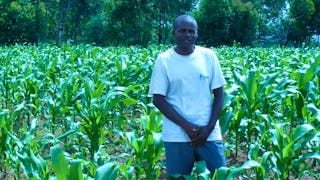
University of Western Australia
Skills you'll gain: Economics, Environmental Issue, Water Resources, Natural Resource Management, Environmental Policy, Public Policies, Cost Benefit Analysis, Policy Analysis, Market Trend

EDUCBA
Skills you'll gain: Internet Of Things, Big Data, Data Management, Wireless Networks, Predictive Analytics, Applied Machine Learning, Analytics, Water Sustainability, Data-Driven Decision-Making, Environmental Monitoring, Real Time Data, Automation, Data Analysis, Data Collection
What brings you to Coursera today?

University of Illinois Urbana-Champaign
Skills you'll gain: Land Management, Risk Management, Real Estate, Legal Risk, Water Resource Management, Balance Sheet, Supply Chain, Environmental Social And Corporate Governance (ESG), Investments, Property and Real Estate, Food and Beverage, Environmental Issue, Mitigation, Sustainable Systems, Asset Management, Financial Analysis, Decision Making, Supply Chain Management, Supply Chain Systems, Consumer Behaviour
University of Illinois Urbana-Champaign
Skills you'll gain: Infectious Diseases, Infection Control, Preventative Care

University of California, Davis
Skills you'll gain: ArcGIS, Spatial Data Analysis, GIS Software, Spatial Analysis, Data Storytelling, Geographic Information Systems, Datamaps, Data Presentation, Geospatial Mapping, Data Sharing, Public Health, Land Management, Heat Maps, Image Analysis, Project Management, Data Quality, Metadata Management, Network Analysis, Data Mapping, Data Modeling

University of Illinois Urbana-Champaign
Skills you'll gain: Wealth Management, Estate Planning, Portfolio Management, Real Estate, Investments, Financial Industry Regulatory Authorities, Commercial Real Estate, Regulatory Compliance, Asset Management, Tax Planning, Finance, Risk Management, Return On Investment, Financial Analysis, Business Strategies, Strategic Planning, Business, Data Management, Financial Statements, Failure Analysis
University of Illinois Urbana-Champaign
Skills you'll gain: Legal Risk, Financial Analysis, Decision Making, Risk Management, Risk Analysis, Lease Contracts, Cash Flows

Dartmouth College
Skills you'll gain: Environment, Environmental Issue, Environmental Science, Demography, Energy and Utilities, Nutrition and Diet, Oil and Gas, Systems Thinking
Best Agriculture courses from University of Illinois Urbana-Champaign
Top-rated Agriculture courses offered by University of Illinois Urbana-Champaign on Coursera.
- Supply Chain of AgricultureUniversity of Illinois Urbana-ChampaignIntermediate1 - 4 WeeksUniversity of Illinois Urbana-Champaign
- Agribusiness and Sustainable Food Production EconomicsUniversity of Illinois Urbana-ChampaignIntermediate3 - 6 MonthsUniversity of Illinois Urbana-Champaign
- Pest & Disease ManagementUniversity of Illinois Urbana-ChampaignBeginner1 - 4 WeeksUniversity of Illinois Urbana-Champaign
Best Agriculture certificate programs
Earn a certificate in Agriculture from top universities and companies.
- AgroforestryUniversity of FloridaIntermediate3 - 6 MonthsSpecialization
- Geographic Information Systems (GIS)University of California, DavisBeginner3 - 6 MonthsSpecialization
- Land, Agriculture, and Alternative InvestingUniversity of Illinois Urbana-ChampaignIntermediate3 - 6 MonthsSpecialization
Best Agriculture courses for beginners
Top-rated beginner-friendly Agriculture courses with no prerequisites.
- Sustainable Agricultural Land ManagementUniversity of FloridaBeginnerNo prerequisites
- Agriculture, Economics and NatureUniversity of Western AustraliaBeginner1 - 3 MonthsNo prerequisites
- IoT Enabled FarmingEDUCBABeginner1 - 4 WeeksNo prerequisites










